

Appalachian Trail Thru-Hiking – A 28-Year Perspective
Whether you’re a “green bean” staring at the climb out of Amicalola Falls State Park in Georgia or an Appalachian Trail section hiker looking to finally close the loop, as a seasoned Appalachian Trail Thru Hiking guide, I’ve seen 28 years of the Appalachian Trail’s evolution.
From the days of heavy leather boots and paper maps to today’s ultralight quilts and satellite messengers, one thing remains constant: the trail provides, but it also tests.
My name is Michelle Michaud, the Founder and CEO of Wandering Boots Appalachian Trail Support Hiking Guides. With 3 successful Appalachian Trail completions under my belt and years spent guiding others, I’ve distilled the “Appalachian Trail (AT) experience” into a few essential pillars for 2026 and beyond.
What Has Changed?
In the late ’90s, we hiked the Appalachian Trail in a bubble. A small fraction of mostly young hikers who just wanted to get out and enjoy the woods. Their hiking gear wasn’t about being lightweight, but being durable to handle the toughness of what hikers were about to endure.
It was about getting away from society for a spell and away from the stress of everyday life. A way to find yourself and find what you were made of. Today, the Appalachian Trail is more social and accessible, but also more regulated.
Hikers come from all over the world and in record numbers to hike the Appalachian Trail. The gear has gotten more technical and lightweight, thus allowing more individuals from all walks of life and ages access to what used to be a small group of the same type of individuals.
The “Half-Mile” Growth: In 2026, the official length of the Appalachian Trail is 2,197.9 miles. Small reroutes, land ownership changes, and environmental concerns have added miles to the overall length of the trail over the years.
The Footwear Revolution: 28 years ago, we wore “widow-makers” (heavy boots) to hike the trail. Now, over 90% of thru-hikers use trail runners. Your feet will thank you, but your ankles need to be ready for the rock fields of Pennsylvania. I still prefer hiking boots for better stability, but also understand the draw for hikers to wear lighter footwear to make the hike a little easier.
But, with less stability, it also comes with more foot issues, such as increased blisters, ankle sprains, stress fractures, sore feet, and more frequent footwear replacement.
Digital vs Traditional: While FarOut, a popular navigational guide to the Appalachian Trail, featuring a very detailed Appalachian Trail map, will help make your adventure both safe and unforgettable, and is the gold standard for real-time water and shelter updates, never underestimate the power of a paper map when your battery hits 0% in a Maine downpour.
I always recommend carrying a paper map as a backup. Most hikers will use The AT Guide by David “Awol” Miller as an easier way of figuring out logistics and resupply when off-trail.
Guided Services: Why Hire a Professional Hiking Guide?
Most people think of the Appalachian Trail as a solo journey, but a professional guide support service can be the difference between a “Thru-Hike” and a “D-N-F” (Did Not Finish). Below are some of the benefits that a professional and experienced trail guide service can provide hikers to ensure a successful Thru-Hike of the Appalachian Trail.

Shakedowns: Before you set foot on Springer Mountain, we go through your pack and gear. We aim for a base weight under 15 lbs. and an overall weight of under 30 lbs. We will also check to make sure you have all the essentials to complete the hike.
Hiking Skill Clinics: During the winter, I virtually teach hikers about gear and all the choices involved, train for the hike, answer questions, go over what to expect, what hikers will encounter, trail life, Leave No Trace (LNT) ethics, logistics of being on the trail, resupply options, lodging options, shuttles, and more.
Logistical Scouting: I provide the logistics for the tricky sections, like the 100-Mile Wilderness in Maine or the high-elevation stretches of the Smokies. I am there every step of the way with planning logistics once hikers get to the trailheads for ease of resupply and figuring out the next sections.
With the support vehicle following the hikers’ journey from Georgia to Maine, all the hikers need to concentrate on is getting through the day until the next meet-up.
Hiking Support Services & Logistics
Success on the Appalachian Trail isn’t just about walking; it’s about the infrastructure supporting your hike.
Shuttles & Slack-packing: Sometimes the best way to get through a rough patch is to “slack” it—carrying only a daypack while we move your heavy gear to the next road crossing.
Resupply Strategy: With hikers keeping extra gear, clothes, and camp food in the Support Vehicle, resupply at trailheads is a breeze! Hikers only need to carry what they need for that day or until the next meet-up, thus saving weight, time, and money by not having to get off the trail and find a way into towns to get what they need.
Emergency Contact: Having a “Trail Parent” off-trail who understands the terrain and weather patterns provides a safety net that Google Maps can’t offer. I keep track of all hikers’ locations and make sure everyone arrives safely, or I go hiking to find them. As a former medical professional (EMT), I also assist with minor injuries and offer care.
Lessons from 5 Million Steps
“The trail doesn’t care about your resume or your expensive gear. It only cares about your next step.”
Part of the trail hiking community that everyone is drawn to is the inclusion of all types of hikers. By using “trail names”, hikers form a special bond that goes above age level, career achievements, sex, and status. We are all hikers out there. It’s amazing to see how everyone cheers each other on and gets sad when someone has to leave the trail.
If I’ve learned anything in 28 years, it’s that the trail is 10% physical and 90% mental. You don’t hike to Maine; you hike to the next white blaze.
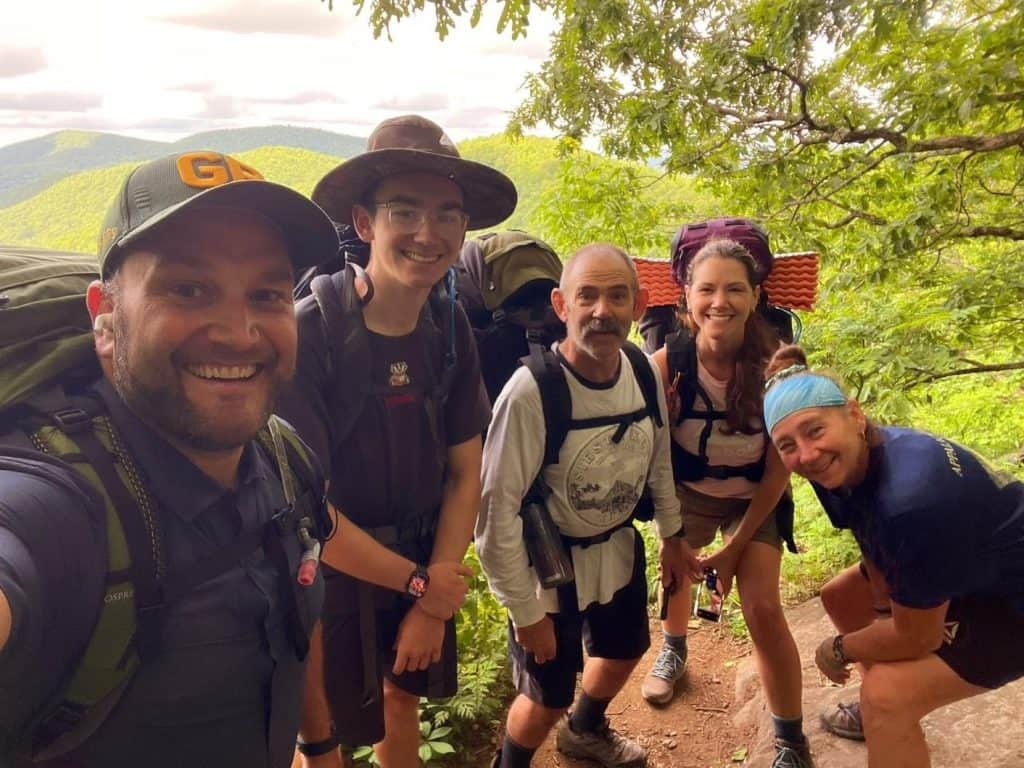
Professional, Knowledgeable, and Experienced Appalachian Trail Guides
Michelle Michaud
Founder and CEO of Wandering Boots Appalachian Trail Support Hiking Guides
Guide Support for Thru-Hiking the Appalachian Trail
Phone: (407) 234-1209 Email: fyrflyfla@yahoo.com
Website: Wandering Boots Appalachian Trail Support Hiking Guides